

Table of Contents
- Why Bookkeeping Matters for Side Hustle Owners
- How to Separate Personal and Business Expenses
- Best Bookkeeping Software for Entrepreneurs
- Setting Up Your Financial Records System
- Tax Deductions for Side Hustles You Shouldn’t Miss
- Automating Your Bookkeeping Workflow
- Preparing for Tax Season With Organized Records
- Common Bookkeeping Mistakes Side Hustlers Make
Last Updated: August 26, 2026
Why Bookkeeping Matters for Side Hustle Owners
Most side hustlers treat bookkeeping like an afterthought, focusing instead on landing clients and growing revenue. But this approach costs money, sometimes thousands in missed tax deductions or overpaid quarterly taxes, and exposes you to audit risk if the IRS questions your records.
At Art Marina Tax Firm, we provide comprehensive tax preparation, IRS resolution, bookkeeping, and business consulting services tailored for individuals and small businesses. We empower our clients to achieve their financial goals through customized tax-saving strategies and proactive financial planning. Bookkeeping is the foundation that separates a sustainable side hustle from one that collapses under its own complexity. This guide walks you through practical bookkeeping tips that work whether you’re earning an extra $5,000 per year or building toward a full-time business.
How to Separate Personal and Business Expenses
The single biggest mistake side hustlers make is mixing personal and business money. This creates two problems: it’s nearly impossible to calculate actual profit and loss, and the IRS views commingled finances with suspicion. If audited and you can’t clearly demonstrate which expenses were legitimate business costs, you’ll lose deductions you were entitled to claim.
Open a Dedicated Business Bank Account
The simplest fix is a dedicated business bank account. You don’t need fancy features, most banks offer basic business checking with low or no monthly fees. Use this account exclusively for business income and expenses.
The benefit is immediate: when you pull your bank statements at tax time, every transaction is automatically categorized as business-related. No more manual sorting. Your bank statement becomes your first line of documentation.

Use Accounting Categories for Clarity
Even with a dedicated account, you need to know which expenses fall into which categories. These distinctions matter because different expense categories have different rules, caps, and documentation requirements.
Set up categories that match your actual business. For a freelance writer, that might be: software subscriptions, office supplies, professional development, meals with clients, and home office expenses. Use the same categories every month, tag every transaction, and your bookkeeping becomes self-organizing.
Best Bookkeeping Software for Entrepreneurs
Choosing accounting software directly impacts your bookkeeping workflow. For side hustles, you have three tiers: free tools like Wave for very simple businesses, mid-tier platforms like QuickBooks Self-Employed and FreshBooks designed for freelancers, and premium systems like QuickBooks Online for comprehensive accounting.
Most side hustlers should start in the mid-tier. The time saved on expense categorization and reconciliation justifies the monthly cost. Look for these features: automatic bank feeds, automatic categorization, invoicing, and tax reports. If the software integrates with tools you already use like Stripe or Shopify, even better.
The cost difference between platforms is often less than one hour of professional bookkeeping. Don’t let price be your only factor, a tool you actually use beats a cheaper one you abandon.
Setting Up Your Financial Records System
Bookkeeping software handles the digital side, but you still need a system for physical receipts and documentation. The IRS doesn’t require original receipts for most expenses under $75, but you do need records that substantiate your deductions (irs.gov).
Establish a Receipt Management Process
For digital receipts, forward confirmation emails to a dedicated folder or save to cloud storage like Google Drive. Use a consistent naming convention: date-vendor-amount. For physical receipts, take a photo immediately and store in the same cloud folder. This takes 30 seconds per receipt but eliminates the risk of losing documentation.
At the end of each month, spend 15 minutes reviewing your receipts folder and matching them against your accounting software. Flag anything missing or unclear.
Create a Monthly Reconciliation Routine
Reconciliation compares your accounting records to your bank statements to ensure they match. This takes 20 minutes per month and prevents costly errors.
Pull your bank statement and accounting software report for the same month. Go through each transaction in the bank statement and verify it appears in your software with the correct amount and category. This catches missing payments, incorrect categorizations, duplicates, or fraudulent charges.
Reconciliation is the single best way to maintain accurate financial records. Do it monthly, and your year-end tax preparation becomes straightforward.
Tax Deductions for Side Hustles You Shouldn’t Miss
Side hustlers leave money on the table because they don’t know what’s deductible. The IRS allows you to deduct any ordinary and necessary business expense.
Home office expenses are deductible if you have a dedicated space used exclusively for business. Use the simplified method: $5 per square foot, up to 300 square feet (irs.gov). For a 200-square-foot home office, that’s $1,000 per year in deductions with zero documentation required.
Meals with clients or prospects are 50% deductible (or 100% if purchased after September 30, 2026, through 2027) (irs.gov). Keep the receipt and note who attended and the business purpose.
Internet and phone are deductible if used for business, but only the business percentage. Vehicle expenses are deductible through mileage tracking (67 cents per mile in 2026) or actual expenses like fuel, insurance, and repairs.
Professional development, courses, conferences, books, and certifications are fully deductible if they maintain or improve skills related to your business.
The key principle: if the expense is directly related to generating business income and isn’t personal, it’s likely deductible. When in doubt, keep the receipt and ask a tax professional.
Automating Your Bookkeeping Workflow
Manual bookkeeping is the enemy of consistency. Automation transforms bookkeeping from a chore you procrastinate on into a background process.
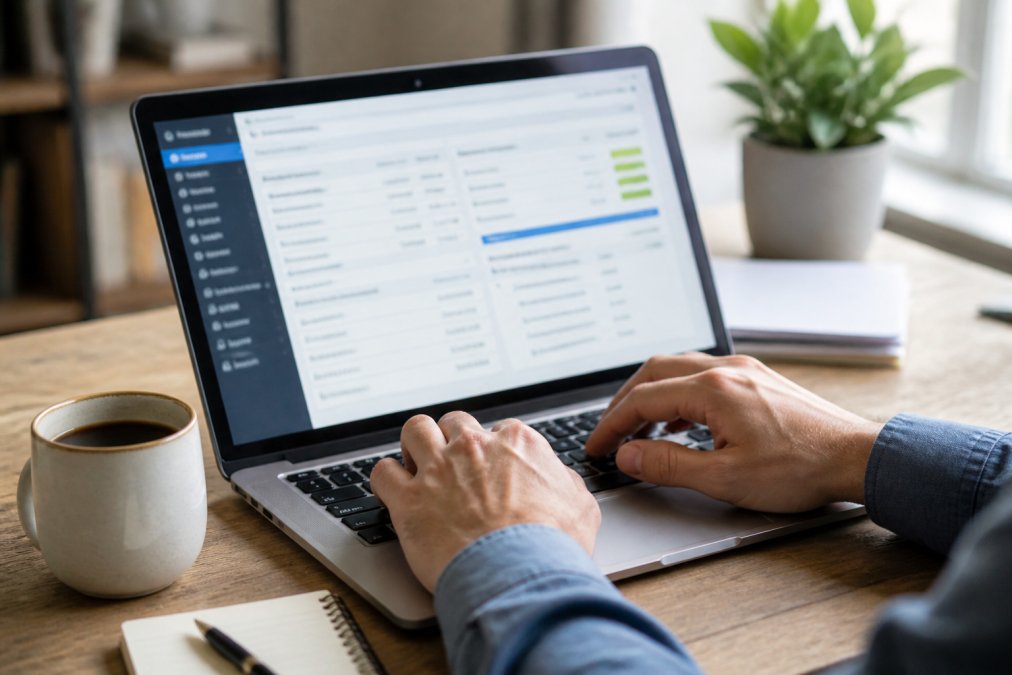
Start with automatic bank feeds. Connect your business bank account to your accounting software, transactions import automatically every day. Enable automatic categorization so the software learns your spending patterns and categorizes recurring charges the same way.
Set up automatic invoicing for recurring clients and use payment integrations if you accept payments online. Connect Stripe, PayPal, or Square to your accounting software so payments import directly.
The goal is to reach a state where your bookkeeping runs on autopilot. You review it monthly to catch errors, but you’re not manually entering transactions or chasing down invoices.
Preparing for Tax Season With Organized Records
Tax season is stressful for side hustlers because most wait until January to organize records. The solution is to prepare continuously throughout the year.
By November, pull a preliminary profit and loss statement from your accounting software. Review it for anything that looks wrong. Gather all documentation and organize it by category. Review your estimated tax payments to ensure you’ve paid quarterly taxes.
By December 31, you should have clean records, organized documentation, and a clear picture of your year’s financial performance. When tax time arrives, you’re not starting from scratch, you’re simply reviewing and filing.
Common Bookkeeping Mistakes Side Hustlers Make
Mixing personal and business finances. This is the #1 mistake. Use a dedicated business account.
Not tracking mileage. Vehicle expenses are deductible only if you track mileage. Use a simple log or app like MileIQ.
Treating taxes as an afterthought. Review your profit and loss statement quarterly and set aside money for taxes monthly.
Using the wrong business structure. Some side hustles should be sole proprietorships; others should be LLCs or S-corps. A tax professional can help determine the right structure.
Failing to reconcile monthly. Without monthly reconciliation, errors compound. Spend 20 minutes per month to prevent this.
Not keeping receipts. Keep every receipt for at least three years.
Ignoring home office expenses. The simplified method requires zero documentation and takes one minute to calculate.
Procrastinating on setup. Set up your system from day one, even if your business is small.
Bookkeeping tips for side hustle owners ultimately come down to one principle: consistency beats perfection. You don’t need a complex system, you need a simple system you’ll actually use every month. A dedicated business account, basic accounting software, and 20 minutes of monthly reconciliation create a foundation that scales as your business grows. When you’re ready to take your side hustle to the next level, Art Marina Tax Firm helps side hustlers transition to full-time businesses with tax-optimized structures and comprehensive financial planning. Book Now to discuss your specific situation and discover tax savings tailored to your business.
Frequently Asked Questions
Q: Do I need a separate bank account for my side hustle?
A: Yes. A dedicated business bank account is one of the most important bookkeeping tips for side hustle owners. It automatically separates your personal and business expenses, making recordkeeping far simpler, simplifying tax preparation, and providing a clear audit trail if the IRS ever questions your filings. Many banks offer free or low-cost business checking accounts for small businesses and sole proprietors.
Q: What are the most common bookkeeping mistakes for side hustlers?
A: The biggest mistakes include mixing personal and business expenses, failing to track receipts, delaying bank reconciliation, underestimating tax deductions, and skipping quarterly tax planning. Many side hustlers also wait until tax season to organize records, which creates stress and often results in missed deductions. Setting up systems early prevents these costly errors and makes tax compliance straightforward.
Q: How can I prepare for tax season with a side hustle?
A: Organize your financial records monthly rather than waiting until year-end. Track all income through your business bank account, categorize business expenses consistently, keep receipts for tax deductions for side hustles, and reconcile your accounts quarterly. Use accounting software to generate profit and loss statements throughout the year. This approach reduces tax preparation time and helps identify tax-saving opportunities before filing deadlines arrive.
Q: What bookkeeping records should I keep for my side hustle?
A: Maintain bank statements, invoices, receipts, expense reports, and a general ledger showing all transactions. Keep records of income from clients, payment records showing when you were paid, and documentation of all business expenses. The IRS recommends retaining records for at least three years. Digital storage with cloud-based accounting software makes this easier and provides automatic backup protection.
This article was written using GrandRanker